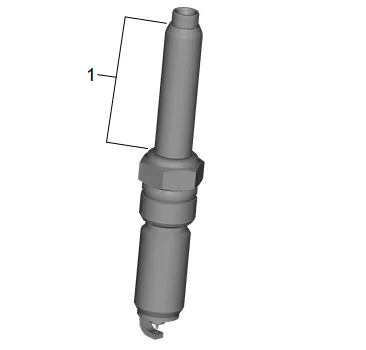
To avoid damage to the iridium tip on the center electrode, DO NOT attempt to
adjust spark plug gap. If the spark plug gap does not meet specifications, replace
the spark plug.
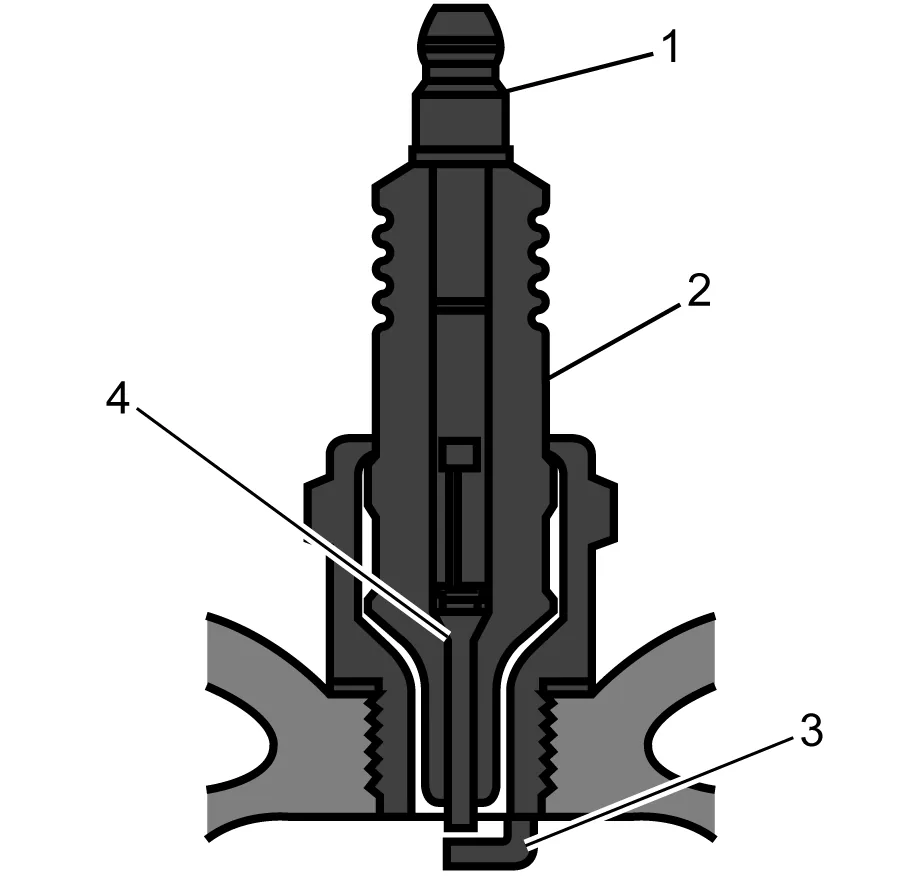
– Measure the gap between the center electrode (4) and the side electrode (3) terminals.
This must be done carefully in order to avoid damaging the small diameter Iridium center
electrode, refer to Ignition System Specifications. An excessively wide electrode gap can
prevent correct spark plug operation.
– Inspect for the correct spark plug torque, refer to Fastener Specifications. Insufficient
torque can prevent correct spark plug operation. An over torqued spark plug, causes the
insulator (2) to crack.
– Inspect for signs of tracking that occurred near the insulator tip instead of the center
electrode (4).
– Inspect for a broken or worn side electrode (3).
– Inspect for a broken, worn, or loose center electrode (4) by shaking the spark plug.
A rattling sound indicates internal damage.
A loose center electrode (4) reduces the spark intensity.
– Inspect for bridged electrodes (3, 4). Deposits on the electrodes (3, 4) reduce or eliminates
the gap.
– Inspect for worn or missing platinum pads on the electrodes (3, 4) If equipped.
– Inspect for excessive fouling.
Inspect the spark plug recess area of the cylinder head for debris. Dirty or damaged threads
can cause the spark plug not to seat correctly during installation.
Spark Plug Visual Inspection
Normal operation—Brown to grayish-tan with small amounts of white powdery deposits are
normal combustion by-products from fuels with additives. Reddish orange deposits can
indicate MMT fuel additive which is still used in some markets around the world (will cause
misfire and cannot be burned off). MMT fuel additive use should be avoided.
Carbon Fouled—Dry, fluffy black carbon, or soot caused by the following conditions:
– Rich fuel mixtures
Leaking fuel injectors
Excessive fuel pressure
Restricted air filter element
Incorrect combustion
– Reduced ignition system voltage output
Weak coils
Worn ignition wires
Incorrect spark plug gap
– Excessive idling or slow speeds under light loads can keep spark plug temperatures so low
that normal combustion deposits may not burn off.
Deposit Fouling—Oil, coolant, or additives that include substances such as silicone, very
white coating, reduces the spark intensity. Most powdery deposits will not effect spark
intensity unless they form into a glazing over the electrode.