Oil Pressure Diagnosis and Testing (1)
Engine Mechanical - 5.3L L84 or 6.2L L87 | Diagnostic Information and Procedures | Document ID: 5617553 Oil Pressure Diagnosis and Testing Special Tools EN-21867-A Oil Pressure Gauge Kit EN-21867-6 Oil Pressure Gauge Adapter EN-47971 Oil Pressure Gauge Adapter Equivalent regional tools: Special Tools Oil Filter Pressure Test Procedure
- With the vehicle on a level surface, run the vehicle for a few minutes. Allow adequate drain down time, 2–3 minutes, and measure the oil level.
- If required, add the recommended grade engine oil and fill the crankcase until the oil level measures full on the oil level indicator.
- Run the engine briefly, 10–15 seconds, and verify low or no oil pressure on the vehicle gauge or light.
- Listen for a noisy valve train or a knocking noise.
- Inspect for the following conditions: Oil diluted by water or glycol antifreeze. Coolant in Engine Oil Foamy oil, which may be caused by a cut or damaged oil pump screen O-ring seal
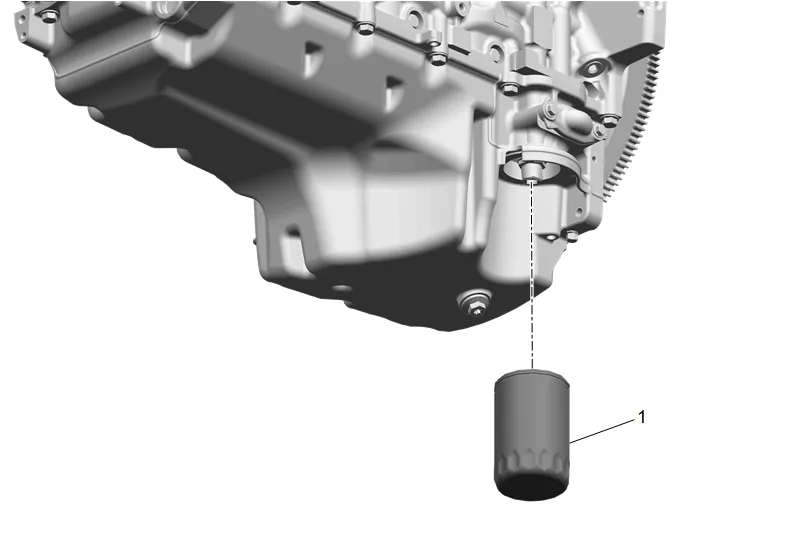
- Remove the oil filter (1).
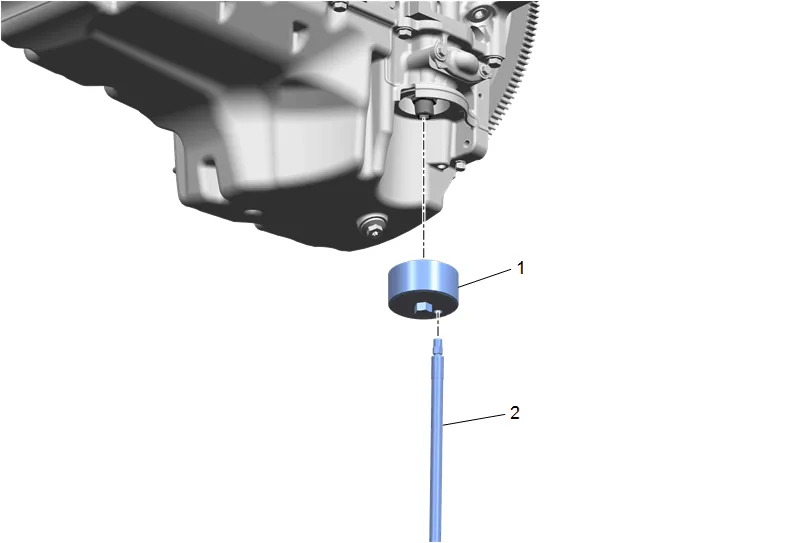
- Install the EN-47971 Oil Pressure Gauge Adapter (1) and EN-21867-A Oil Pressure Gauge Kit (2), or equivalent.
- Run the engine until the engine reaches normal operating temperature and measure the engine oil pressure.
- Compare the readings to Engine Mechanical Specifications.
- If the engine oil pressure is below specifications, inspect the engine for 1 or more of the following conditions: Check if the engine oil cooler or oil cooler lines are plugged or damaged. Oil pump-to-engine block bolts loose. Oil pump screen loose, plugged, or damaged. Oil pump screen O-ring seal missing or damaged. Excessive debris in the oil pan and/or oil filter (possibly indicating internal engine damage). Malfunctioning oil pump pressure relief valve. Excessive bearing clearance and/or bearing damage. Crankshaft and Bearing Removal and Installation Camshaft Replacement Cracked, porous, or restricted oil galleries. Oil gallery plugs missing or incorrectly installed. Engine Block Overhaul Malfunctioning valve lifter oil solenoid valve. Oil Pressure and Temperature Sensor Pressure Test Procedure
- With the vehicle on a level surface, run the vehicle for a few minutes. Allow adequate drain down time, 2–3 minutes, and measure the oil level.
- If required, add the recommended grade engine oil and fill the crankcase until the oil level measures full on the oil level indicator.
- Run the engine briefly, 10–15 seconds, and verify low or no oil pressure on the vehicle gauge or light.
- Listen for a noisy valve train or a knocking noise.
- Inspect for the following conditions: Oil diluted by water or glycol antifreeze. Coolant in Engine Oil Foamy oil, which may be caused by a cut or damaged oil pump screen O-ring seal
-
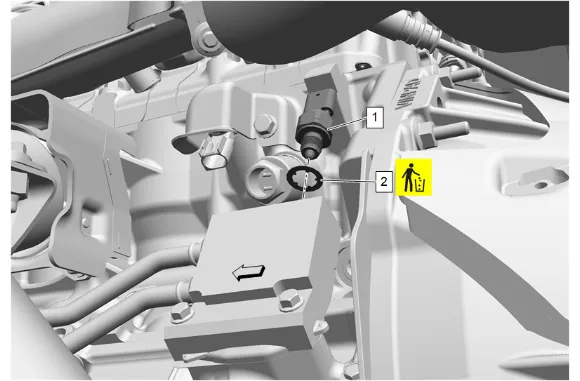
Disconnect the engine oil pressure and temperature sensor electrical wiring harness connector.
-
Engine Oil Pressure and Temperature Sensor (1) » Remove
-
Engine Oil Pressure Sensor Gasket (2) » Remove and DISCARD
-
Install the EN-21867-6 Oil Pressure Gauge Adapter (1) and EN-21867-A Oil Pressure Gauge Kit (2), or equivalent.
-
Run the engine until the engine reaches normal operating temperature and measure the engine oil pressure.
-
Compare the readings to Engine Mechanical Specifications.
-
If the engine oil pressure is below specifications, inspect the engine for 1 or more of the following conditions: Check if the engine oil cooler or oil cooler lines are plugged or damaged. Oil pump-to-engine block bolts loose. Oil pump screen loose, plugged, or damaged. Oil pump screen O-ring seal missing or damaged. Excessive debris in the oil pan and/or oil filter (possibly indicating internal engine damage). Malfunctioning oil pump pressure relief valve. Excessive bearing clearance and/or bearing damage. Crankshaft and Bearing Removal and Installation Camshaft Replacement Cracked, porous, or restricted oil galleries. Oil gallery plugs missing or incorrectly installed. Engine Block Overhaul Malfunctioning valve lifter oil solenoid valve.
-
Engine Oil Pressure and Temperature Sensor (1) » Install — Engine Oil Pressure and Temperature Sensor Replacement