Rear Shock Absorber Inspection
- Raise and support the vehicle. Lifting and Jacking the Vehicle
- Visually inspect each of the shock absorbers/struts for external fluid leaks. Refer to the following conditions 1, 2, 3, and 4 for visual inspection. Condition 1
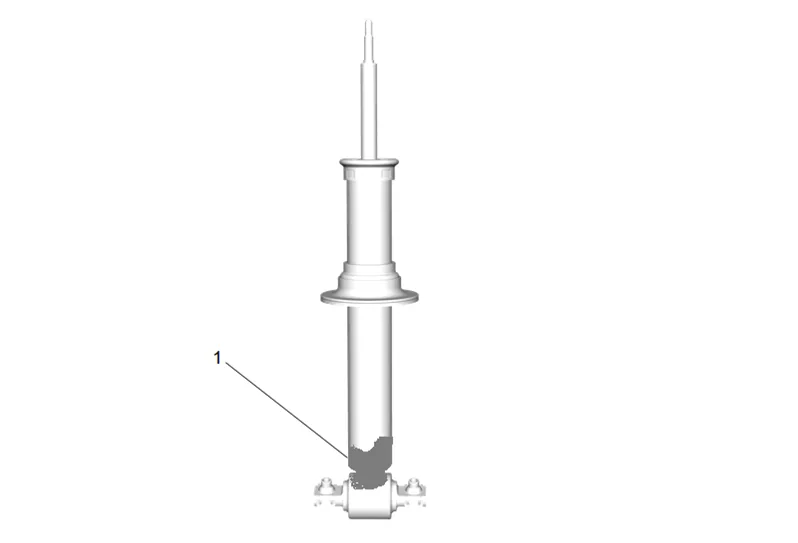
Oil or fluid residue only on the bottom of the lower shock absorber/strut tube (1) or other area NOT originating from the shaft seal, is not a shock absorber/strut related problem. DO NOT replace the shock absorber/strut, look for other external leaks. Condition 2
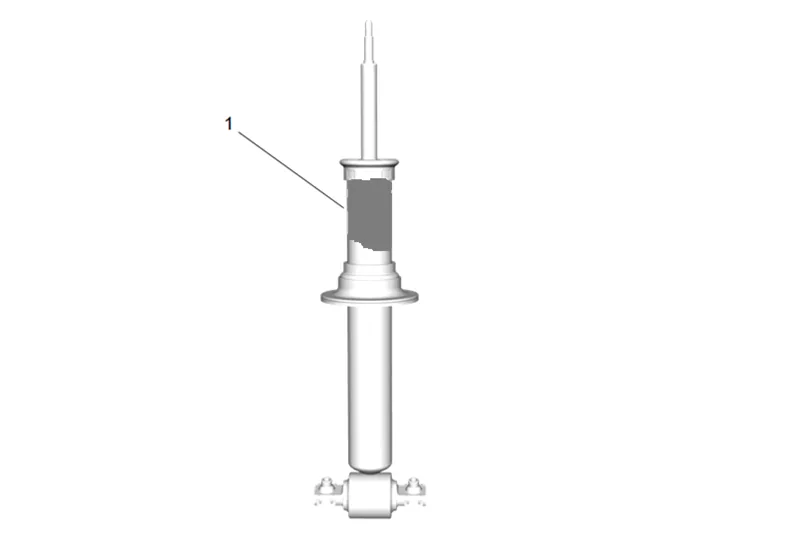
Light film/residue on the shock absorber/strut tube (1), but not on the spring seat and originating from the shaft seal, is a NORMAL condition. DO NOT replace the shock absorber/strut. Condition 3
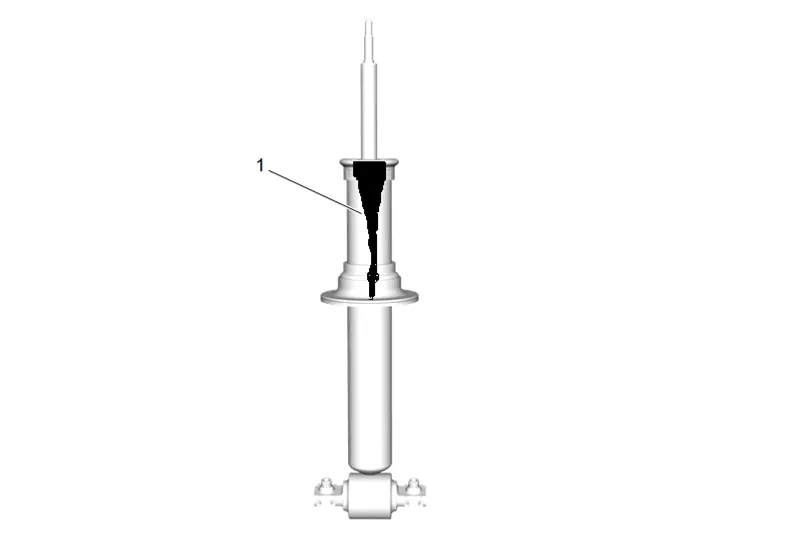
Oil drip or trail down the shock absorber/strut tube (1) and originating from the shaft seal, is an ABNORMAL condition. Replace the shock absorber/strut. Condition 4
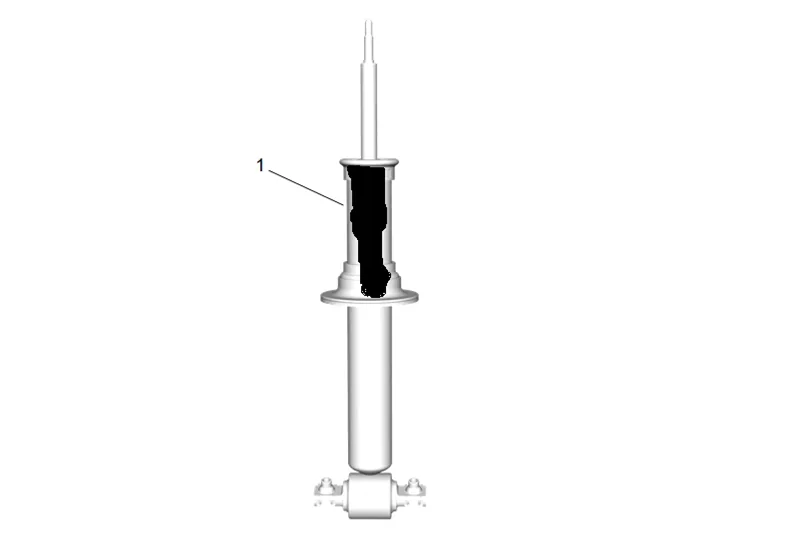
An extreme wet film of oil covering the shock absorber/strut tube (1) and pooling in the spring seat and originating from the shaft seal, is an ABNORMAL condition. Replace the shock absorber/strut. Correction
- If conditions 1 or 2 are found, continue to step 3.
- If conditions 3 or 4 are found, replace shock absorber/strut.
- Remove the support and lower the vehicle.
- If equipped with electronic suspension control system, ensure that the system is working properly and no DTC’s are present. If the system is working properly, continue to step 5.
- Use your hands in order to lift up and push down on each corner of the vehicle 3 times. Remove your hands from the vehicle. If the corner motion exceeds 2 cycles, replace the shock absorber/strut. If the shock absorber/strut does not exceed 2 cycles, NO repair is necessary.